
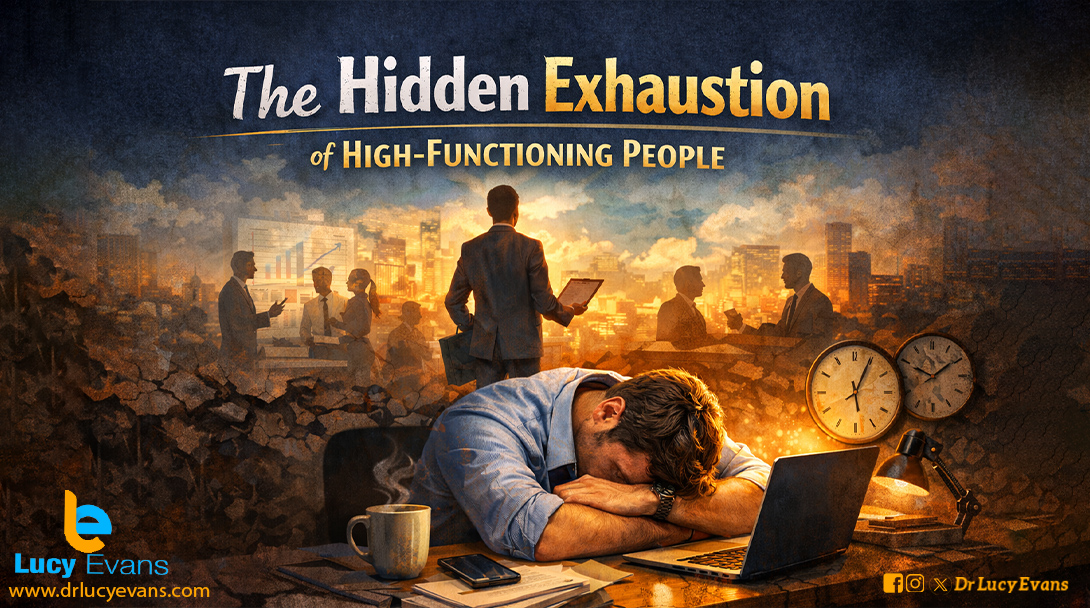
I’ve been noticing something lately. Some of the strongest people I know are exhausted. Not falling apart. Not quitting. Not asking for attention. Just tired. Tired of being the reliable one. Tired of being the emotionally steady one. Tired of carrying responsibilities that no one else even sees. And the difficult part is this — when you’re known as the strong one, people stop checking on you.
Maybe you’re that person. You handle things. You solve problems. You show up. You keep your word. You hold others together when they’re overwhelmed. But underneath all of that competence is a human being who sometimes wants to exhale. Men feel this too.
Many men were taught early that strength means silence. That leadership means absorbing pressure. That asking for support somehow makes you less capable. And many women were taught that being dependable is part of being valuable. That nurturing everyone else comes before tending to themselves. Different social messages. Same exhaustion.
Here’s what I want to say clearly:
Carrying a lot does not mean you don’t need care. You can be responsible and still need rest.
You can be faithful and still feel fatigued. You can be emotionally mature and still feel overwhelmed. I see this often in my work. High-functioning people. Leaders. Parents. Professionals. Ministry workers. Business owners. Students. The ones who rarely fall apart publicly. But their nervous system is constantly on alert. Their bodies stay tight. Their minds don’t shut off. Their sleep is shallow. Irritability creeps in. Small things feel heavier than they should.

That’s not a weakness; that’s prolonged stress without recovery. Even Scripture never glorified endless striving. There are rhythms built into life, work, and rest. Pouring out and being refilled. Strength and surrender. Somewhere along the way, many of us learned how to be strong but never learned how to receive.
So let me ask you something gently:
When was the last time someone held space for you?
Not for what you produce. Not for what you solve. Not for how well you
lead. But for you. If you don’t immediately know the answer, that’s worth
noticing. Being the strong one is honorable. But it is not meant to be
permanent armor. You are allowed to say, “I’m tired.”
You are allowed to need support. You are allowed to let someone else carry
something for a while. Strength and vulnerability are not opposites. They work
together. And sometimes the strongest thing you can do is admit that you don’t
want to carry everything alone anymore.
If this resonates with you, pause today and ask yourself:
Where do I need to soften?
Not collapse. Not give up. Just soften. You don’t have to prove your
strength by how much you endure in silence. You are allowed to be human.